

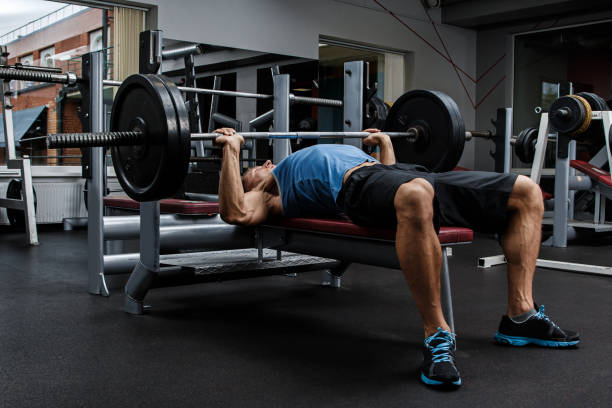
One of the most well-known and esteemed strength training exercises in any gym setting is the barbell bench press. There is virtually always a barbell bench station in use whether you walk into a commercial building in Sydney, a performance centre in Melbourne, or a strength-based sports club in Brisbane.
Even while the press bench press is widely used, its execution is far less common. Many lifters do not fully engage their chest when moving the weight from the rack to lockout. Technical accuracy is important if your objective is real chest development rather than just putting more weight on the bar.
The flat barbell bench press is explained in detail in this blog, along with how to avoid common mistakes and how equipment quality affects performance.
Understanding the Role of the Barbell Bench Press
The compound exercise known as the barbell chest press mainly focuses on:
- The pectoralis major
- The anterior deltoids
- Brachii triceps
- The anterior serratus
- Stabilisers for the upper back
When performed properly, the bench press creates a great deal of mechanical tension over the chest, which is necessary for building muscle.
The bb bench press is also a good way for gym owners and strength coaches to track how well their members and athletes are developing their upper body strength.
Also Read: How Interval Training Improves Speed and Endurance
The Foundation: Setting Up Properly
How well your chest engages depends on your setup before the bar leaves the rack.
1. Bench Positioning
On the bench, lie flat with:
- Eyes right under the bar
- Firmly placed feet on the ground
- Glutes in contact with the bench
- A lower back arch that is both natural and controlled
This arch is not too slight. Better chest activation during the barbell for chest press is made possible by its ability to produce a firm pressing platform while maintaining an elevated rib cage.
Firm padding and no wobble are features of high-quality commercial gym equipment benches. Stability eliminates needless shoulder strain and enhances power transfer.
2. Upper Back Engagement
The most often overlooked component of the barbell bench setup is this.
Prior to unracking:
- Squeeze your shoulder blades together to retract them.
- Lower them a little bit.
- Keep this tension constant for the duration of the set.
Imagine laying a firm foundation over your upper back.
Every repetition involves the chest pressing against that platform.
In the absence of this interaction, the shoulders often take centre stage.
3. Foot Placement and Leg Drive
Performance is greatly enhanced by proper leg drive.
- The feet must stay flat on the ground.
- Knees that are just below hip level
- As you press, push through your heels.
Leg drive stops energy leaking and stabilises the body. Benches are positioned at the right heights in well-designed commercial gym equipment installations to facilitate efficient foot placement.
Choosing the Correct Grip Width
Patterns of muscle activation are influenced by grip width.
For pressing that is focused on the chest:
- Make use of a grip that is just a bit wider than shoulder width.
- Make sure your wrists stay stacked above your elbows.
- When the bar contacts the chest, maintain a vertical forearm position.
Too narrow causes the triceps to become tense. For most lifters, too wide results in decreased pressing strength and increased shoulder strain.
Hold the bar tightly. Overall pressing control and neural stimulation are enhanced by a firm grip.
Executing the Movement: Step by Step
Unrack the Bar
- Lift the bar out of the rack by fully extending your arms.
- Position it horizontally over your shoulders.
- Maintain your firm upper back.
The bar ought to start about above the shoulder.
The Descent Phase
Gently lower the bar.
- Lower the bar towards your lower chest.
- Maintain your elbows between 45 and 70 degrees from your torso.
- Continue to retract your shoulder blades.
- Reduced to a regulated tempo of two to three seconds
The chest stretches under tension during the fall. For hypertrophy, this stretch is essential.
Don’t drop the bar too soon. Controlled lowering lowers the chance of injury and promotes the recruitment of muscle fibres.
The Pressing Phase
When the bar comes up to your chest:
- If you’re exercising for hypertrophy, take a quick break for control.
- Raise the bar in a little diagonal direction.
- Press back in the direction of the rack line.
- Keep your upper back firm and your legs driven.
The bar shouldn’t rise vertically in a straight line. A natural press bench press path moves towards the shoulders in a small backwards motion.
Finish with your arms out, but not too far.
Key Cues for Chest Activation
For many lifters, the barbell chest press mainly affects their shoulders.
To increase emphasis on the chest:
- During the descent, consider bending the bar inward.
- At the top, visualise pressing your biceps together.
- Instead of pushing the bar away, concentrate on pressing your body into the bench.
- Maintain a raised rib cage.
Reevaluate upper back engagement and elbow posture if shoulder fatigue before chest fatigue.
Common Bench Press Form Mistakes
There are a number of common technological issues in commercial gyms and performance centres around Australia.
1. Elbows Flaring Excessively
While wide elbows increase shoulder stress, they also decrease chest tension.
2. Bouncing the Bar
Using momentum reduces muscle tension and increases injury risk.
3. Lifting the Hips
While competitive powerlifting allows certain variations, general training should keep glutes in contact with the bench.
4. Inconsistent Bar Path
Pressing forward or straight up throws off the mechanics.
5. Using Excessive Weight
Chasing statistics instead than maintaining proper form during a bench press frequently leads to poor control.
Chest activation is usually considerably improved by lowering load and improving mobility.
Programming the Flat Barbell Bench Press
In order to maximise hypertrophy:
- Perform the exercise one or two times every week.
- Complete three to five sets of work.
- For each set, perform six to twelve repetitions.
- Take a 90–150 second break in between sets.
To emphasise strength:
- Reduce the number of repetitions to three to six.
- Extend rest intervals to two to three minutes.
- Adhere to strict technological standards.
For full development, athletic clubs and performance centres frequently mix the bb bench press with auxiliary motions including machine chest presses, cable fly variations, and incline pressing.
The Importance of Equipment Quality
Every bench arrangement is different.
Premium commercial gym equipment provides:
- Sturdy, robust frames
- Appropriate rack height modifications
- Sturdy upholstery
- Olympic barbells that are balanced
- Precise plate increases
Purchasing high-end strength training equipment improves long-term member satisfaction and safety in professional facilities around Australia.
Choosing dependable bench stations lowers the chance of harm and boosts user
confidence for gym operators who target small to medium enterprise gyms or performance centres.
Advanced Chest Focus Techniques
After you have mastered the fundamentals, think about these methods.
Paused Repetitions
Time under stress is increased and momentum is eliminated by pausing for one to two seconds on the chest.
Tempo Training
To enhance stretch-mediated hypertrophy, use a three-second descent.
Mind Muscle Connection
With each repeat, take your time and deliberately concentrate on contracting your chest.
Volume Cycling
Alternate weeks with a modest load and hypertrophy focus with weeks with a greater emphasis on strength.
These methods support increasing overload and assist avoid plateaus.
Also Read: Best Gym Equipment for Total Body Fitness
How Often Should You Bench Press?
For lifters in general:
- It is adequate to have one or two sessions every week.
For athletics or highly skilled athletes:
- Progress may be improved with two sessions per week.
Frequency should always be guided by recovery. Reduced performance, joint pain, or chest soreness could be signs that the volume needs to be changed.
Safety Considerations
Always:
- For heavy setups, use a spotter or safety arms.
- Warm up completely using lighter sets.
- Continue to use the same strategy.
- Steer clear of ego-lifting
All heavy barbell training in commercial settings and performance venues should be accompanied by explicit safety procedures.
Why the Barbell Bench Press Remains Essential
The barbell bench press is still a fundamental exercise despite the popularity of machines and functional training fads.
It permits:
- The progressive overload
- Benchmarks for measurable strength
- Full-range growth of the chest
- Training sessions that are effective
A well-equipped barbell bench station is an essential component of any serious strength facility, according to gym owners.
Learning to perform the chest press with a barbell is a long-term investment in upper body development for lifters.
Final Thoughts
The flat barbell bench press may be transformed from a simple pressing exercise into a potent chest-building tool by learning how to do it properly.
Pay attention to:
- Robust configuration
- Tight upper back
- Managed descent
- Appropriate elbow placement
- A steady bar path
- Appropriate loading
Strength and hypertrophy come naturally to those who perform bench presses with proper form.
The barbell chest press is still a major training standard in Australia, New Zealand, and high-performance training settings around the world. Develop your technique, become proficient in the action, and let increasing overload help you.
A stronger, more developed chest based on sound fundamentals is the result, in addition to a stronger press-bench press.